
Low-end classic Mac users, Judgment Day seems to have come for us all. While reviewing July 9th in Low End Mac History for 2001, I came across an account of how one vintage Mac user was having trouble accessing his email using a Triassic Mac running vintage software. It seems that there was a problem related to SMTP authentication. The software that was needed to solve the problem requires Mac OS 8 and a PowerPC processor.
A Digital Divide
Two years later, I have encountered the digital divide for 68k Macs. The chasm is so wide that crossing it does not look possible.
There are a few reasons why the 68k Mac is out of the Web game. ISPs such as Juno, AOL, and others have upgraded their systems to handle OS X 10.x mutations. OS 9 and earlier Mac OSes have fallen out of favor due to the expense of maintaining a server that can interface with such “old” equipment.
There is also the notion of “forced obsolescence” – changing hardware or software so that older equipment has to be scrapped even if it still works. The retirement of the serial and ADB ports on Macs in favor of USB is a good example of this. The conversion to USB ended the market for new non-USB peripherals, including printers and modems.
The final reason for eliminating 68k machine access to the Web and email is the decision by some Freenet ISPs to shut down their dialup modem servers. Freenets do not have the budget to maintain up-to-date hardware and software, and most rely on using Unix freeware. 68k Mac users only needed to have a terminal emulator program like ZTerm 1.01, a modem on the Mac, a modem on the Freenet server, and a Unix shell account on the Freenet in order to access email and a text only version of the Web.
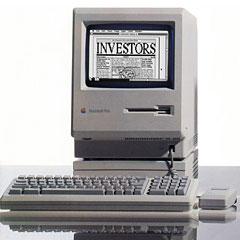
People using something as old as a Mac Plus or a IBM AT could access their email in this manner. The use of more contemporary TCP/IP standard software is problematic, since it is not compatible with most computers this old.
A month back, my Freenet administrators shut down the modem bank on the server for “security and cost” considerations. The only way I can now access the Freenet is by borrowing someone else’s more up-to-date computer and ISP account in order to telnet into my account. I now have to use a Web browser to access the Freenet.
This trend towards computer modernity has some bad consequences. Many functional computers are being discarded. A good deal of this hardware eventually winds up fouling the environment in places like China. It is bad policy to have one group of computer administrators dictate the purchasing habits to the regional computer user community. Some people would call this, well, undemocratic.
‘You Need a Newer Mac’
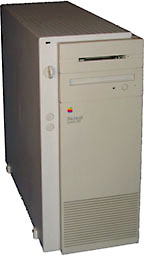 To restore my access to the local Freenet, I have to upgrade to a Mac that was built after 1999. While Macintosh prices have dropped from a high of $7,200 high for a Quadra 900 in 1990, the more modern machines required to use Freenet, when properly equipped with essential software and peripherals, still cost well over $1,000 new.
There are still millions of computer users who cannot spend that amount of money at the regular interval that computer manufacturers want them to. The good economic times of the 1990s are over. Frugality is now the norm. The gap between the computer haves and computer have nots will become larger. In the case of nonprofit institutions, the gap never did close, since frugality has always been the norm.
With the commercial ISPs slowly pulling away from the very 68k Macs that helped bring the Web to the general public in 1994, users of those machines are now down to pre-Web applications for their machines. 68k Macs seem to be slowly leaving the Net before their time.
Before the Internet
Prior to the Web, computers communicated with one another using Bulletin Board Service (BBS) software. BBS networks were more of a hobby in those days and had little commercial value. The time may have come for the BBS to make a comeback. Today’s long distance phone charges are not as bad as there were a decade ago, and one can use some very basic computers and modems to set up a BBS. The BBS would allow these old Macs to communicate with one another again.
Why dialup service is being cast aside by some ISPs is subject to debate. High speed connections have not become universal, because not every computer user has access to a fiber-optic cable. Some parts of the US do not even have 1970s era cable television access! For such individuals, the only communication service that is available is telephone via old fashion copper cable strung to a tall, wooden pole. Modems are far from obsolete.
The BBS would certainly allow me to avoid what I had to do in order to get this article published on LEM – save it on a floppy disk and snail mail it to the publisher.
Short link: http://goo.gl/QJzovE
searchword: 68kleftbehind
