
Low End MacRound Table
PowerPC G3 a Huge Step Forward in Its Day
Low End Mac Staff - 2011.11.16
Sometimes, as with the last round of MacBook Pro updates, processorperformance takes a small step forward. In fact, that's the case moreoften than not, with relatively insignificant 5-10% speed bumps beingthe norm.
But every now and then there's a breakthrough that doublesperformance. For Mac users, those breakthroughs were the Macintosh II, which doubled processor speedwhile also adopting a more powerful chip design in 1987, the Quadra 700 and 900, which introduced the far moreefficient 68040 CPU in 1991, the PowerBook G3 and Power Mac G3, which offerednearly twice the processing power per MHz in November 1997, and theIntel Core i family, which Apple has moved to over the past year.
Today, 14 years after the first G3 Macs were introduced, our stafflooks at those performance leaps from yesterday and today.
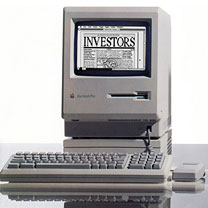 Charles Moore(several columns): Having been onthe Mac for going on 20 years now, I've experienced first-hand many ofthe platform's performance advance transitions. My first Mac was aMac Plus with an 8 MHz 68000processor, so there was lots of room for improvement, although to befair, at least when running System6, the old Plus was pretty lively.
My next step up was an LC 520,the all-in-one variant of the modular LC III, with a 25 MHz 68030 CPU. Inpractical terms, the speed increase from the Plus wasn't really allthat dramatic, the biggest difference was in expansiveness andversatility rather than speed. The LC 520, running System 7.1, was a much more comprehensivelycapable machine than the Plus, and of course the 14" 640 x 480resolution Sony Trinitron display was the major difference from thePlus' 9" 512 x 342 screen. Color was nice, but I found myself missingthe ultra sharp one-bit display in the Plus for things like textediting and Finder navigation. Not so much for the Internet.
As an aside, I did install System 7.0 on the Plus for more tractableInternet access, but it was exceedingly sluggish - one-bit 9" displayswere woefully inadequate for Web surfing, and I kept System 6.0.8installed on another partition (this was on a 20 MB hard drive!) forperformance purposes when the Internet wasn't an issue - this beinglong before Cloud computing.
I never had either a 68020 or a 68040 Motorola Mac, although one ofmy offspring did have PowerBook520 with a 68LC040 chip.
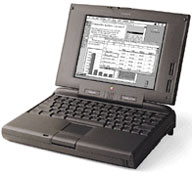 My next step up from the LC 520 was a PowerBook 5300, a much-maligned machinethat I nevertheless developed an affection for. Irreally liked the formfactor, and it was a pretty dependable machine once I upgraded toSystem 7.5.3 and then System 7.5.5 from the original (and genuinelyexecrable) System 7.5.2. Some of the famous issues with the PowerBook5300 were legitimate shortcomings, although the famous spontaneousbattery combustion was way overblown, with the self-immolating earlyexample lithium ion batteries that had been planned for the 5300quickly replaced. It wasn't the most robust Apple laptop, but treatedkindly that one remained in service for seven years - four as my mainworkhorse and then three as my youngest daughter's high schoolcomputer. In general, it was a pretty good experience. It still workedthe last time I booted it up, which was several years ago. Again, theoverall performance profile wasn't that much improved from thepredecessor machine, and the 68K PowerBook 500 actually was faster atsome tasks, but where the 100 MHz PowerPC 603e excelled was in anythingthat required floating-point unit computation. The PowerPC chipincorporated an FPU, while with the 68K machines was an add-on thatmany models didn't have on board (e.g., the LC520 and PowerBook520).
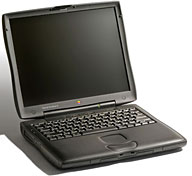 Probably themost dramatic surge in processing power I've experienced with a systemupgrade was in making the jump from the PowerBook 5300 to a 233 MHz WallStreet PowerBookG3 in early 1999. The G3 Series PowerBook was a quantum improvementin speed over the puny 603e chip in the 5300. By contrast, moving to a500 MHz G3 in the PowerBook2000 Pismo that succeeded the WallStreet as my number one axe wasmuch less of a performance boost, notwithstanding more than doubling ofthe CPU clock speed. Nor was the 700 MHz G3 iBook thatsucceeded the Pismo as my front line workhorse machine noticeably muchfaster than the 500 MHz G3 PowerBook - andÊ once I installed a550 MHz G4 upgrade in the Pismo, it leapfrogged back over the iBook asmy fastest computer at the time.
The 1.33 GHz 17"PowerBook G4 that became my next system upgrade was far and awaythe fastest PowerPC machine that I ever owned (still in service as mywife's computer) and a major advance over the iBook. Having 1.5 GB ofRAM helped, of course.
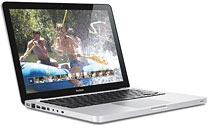 Mycurrent Mac, a 2.0 GHzCore 2 Duo Aluminum Unibody MacBook of the late 2008 design isagain hands down the fastest Mac I've ever owned so far, which meansthat I have lots of room to experience improved performance. However, Ifind that the relatively low powered Core 2 Duo chip (and 4 GB of RAM)still provides what I would call sparkling performance.
I'm looking forward to another major speed boost when I eventuallymove on to a Core "i" powered MacBook of some sort, but for now, Ireally have nothing to complain about with the nearly 3-year-oldMacBook. That said, the fastest Apple machine I own these days is myiPad 2. I just wish it was moreversatile in other ways!
Allison Payne (The BudgetMac): Considering the fact that Moore's Law andstrained flash storage supplies mean computing speed should be levelingoff, it's impressive to see how manufacturers are still managing tofind ways to visibly boost performance. The big leaps forward that cometo mind from my personal experience are USB 1.1 to USB-2.0, thedifference between surfing the Web from the original iPod touch and the4G touch, and the speed boost one sees with SSDs over traditional harddrives. The difference is definitely noticeable at first, but it reallyhits home when you use a Mac or iPod with the older standards aftergetting used to the speed increase.
Dan Knight (Mac Musings): Ifirst used a Mac in 1986, so I've experienced most of theseimprovements in processor efficiency. In 1987, the 16 MHz Mac II added color, a larger display, andexpansion slots while offering almost three times the processing powerof the Mac Plus. The 33 MHz 68040 CPU in the Quadra 700 and 900 wasanother big step forward, roughly twice as powerful as the 40 MHz 68030in the Mac IIfx. PowerPC was another step forward, and the 233 MHz G3in the first Beige G3 was roughly equal in power to a 300-350 MHz 604eCPU, and it soon killed off Apple's top-end Power Mac 9600, which wasbased on the much more costly 604e chip.
That's the anniversary we're celebrating today, the introduction ofthe first Power Mac G3. (The first PowerBook G3 had been introducedjust days earlier. With a 250 MHz G3, it was the world's most powerfullaptop at the time.) Just as the 68040 had allowed Macs to offer morepower at lower clock speeds, the G3 brought that level of improvementto PowerPC.
Fast forward to May 1998, and Steve Jobs was ready to show the worldthe first consumer G3 Mac, the 233 MHz Bondi Blue iMac, whichdidn't ship until August 1998. Apple rode G3 technology for years,eventually offering a 700 MHz G3 iMac and a900 MHz G3iBook.
In August 1999, Apple went to the next level with the Power Mac G4.The heart of the new computer was a modified G3 designed to bettersupport multiple processors and with an onboard "velocity engine",which made it a graphics powerhouse with software that could takeadvantage of it. That, in turn, lead to dual processor G4 Power Macs in2000.
The next big step forward was the switch to Intel x86 chips in 2006,followed by migration to Intel's greatly improved Core-i chips (some ofwhich include both Turbo Boost and HyperThreading) over the past yearor so, which were on the same order of improvement as the 68040 and G3were over their predecessors. Frankly, we're not likely to see thatkind of performance boost again. Processor speeds get faster slowly,and doubling the number of cores gets more difficult the greater theirnumber.
Of course, that's in the personal computer space. In the mobileprocessor space, we've only seen one generation of dual-coreprocessors, and speeds currently top out as 1.2 GHz. Quad-core ARMchips are expected in 2012, and we should see them reaching speeds of1.5 GHz within the coming year, making iPhones, iPads, and theircompetitors vastly more powerful than today's models. But even theywill reach a practical limit in just a few years, barring some radicalbreakthrough in chip architecture.
About LEM Support Usage Privacy Contact
Follow Low End Mac on Twitter
Join Low End Mac on Facebook
Favorite Sites
MacSurfer
Cult of Mac
Shrine of Apple
MacInTouch
MyAppleMenu
InfoMac
The Mac Observer
Accelerate Your Mac
RetroMacCast
The Vintage Mac Museum
Deal Brothers
DealMac
Mac2Sell
Mac Driver Museum
JAG's House
System 6 Heaven
System 7 Today
the pickle's Low-End Mac FAQ
Affiliates
Amazon.com
The iTunes Store
PC Connection Express
Macgo Blu-ray Player
Parallels Desktop for Mac
eBay