
2002 – The G4 has finally reached the 1 GHz mark. This comes even as chips from Intel and AMD surpass the 2 GHz level. Will Apple ever catch up, let alone surpass its PC counterparts in MHz? The answer may lie in revisiting a decision made over eight years ago.
In the early 90s, Apple decided that the future of the Mac lay in changing the entire architecture of the computer. Macs had always used the 680×0 family of processors manufactured by Motorola. Apple decided to move its computers to PowerPC chips produced by both Motorola and IBM. The reasoning was that this new architecture provided more robustness and greater speed.
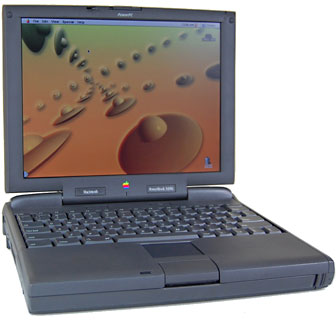 This theory proved to be true, at least for a while. During the mid-90s, Apple often produced the fastest computers on the market, even measured in raw megahertz. The PowerBook 3400c was the fastest notebook on the market when it was rolled out, just as one example.
Alas, the chip engineers at Motorola and IBM began to fall behind their rivals at Intel and AMD. Gradually, the “PC” chips pulled ahead in the MHz race.
This could be the end of the story. But did you ever wonder what became of the Motorola 68040, or even the 68030, for that matter? Motorola didn’t just say, “Oh well, Apple quit using this chip, let’s shut down all production of it.” No, quite the opposite occurred.
Motorola continued development, and the chip is now used in a wide variety of embedded and proprietary technologies. In fact, this venerable chip is approaching the 2 GHz level! This fact is not widely known because the chip is no longer used in the manufacture of consumer computers or peripherals. Apple should change this.
The celebration of the PowerPC G4’s ascent to the 1 GHz mark has overshadowed the fact that the 68040, whose current top-of-the-line model runs at 1.9 GHz, is poised to double the G4’s speed in a few short months. Prototype 2 GHz 68040 CPUs have appeared at OEM engineering plants in Taiwan and Malaysia. It is time to return this time-tested chip to the Mac.
Due to the fact that R & D costs for the evolution of the 68040 have been very low (reports suggest that a team of as few as three engineers have been involved in the continuing work), the current 1.9 GHz model costs approximately $19 in lots of 100.
Hard drives of 20 GB can be had for well under $100; 4-6 GB hard drives that, like the 68040 processor, are used only for specialty applications, cost less than $30 in quantity. Apple could use the 68040, a 4 GB hard drive, 32 MB of RAM, a 15″ CRT (with the headlong rush into flat-panel LCD technology, manufacturers are practically giving away CRT’s these days), and a standard CD-ROM to manufacture a true entry-level iMac at a cost of around $140.
Apple could price this iMac at $299 and sell every one they could manufacture. Package it with Mac OS 8.1 and AppleWorks, and you have a complete, entry-level consumer system for less than $300!
Eat your heart out, eMachines. A $299 consumer Mac would push Apple to at least a 25% market share within 12 months, and who knows how high after that. Sometimes the answers to the questions of the future lie in the lessons of the past.
Keywords: #ludditemac #aprilfools
searchword: ludditemac
