
The world took a big step towards the iPod generation when Sony introduced the Walkman in 1979. The device was not particularly advanced – portable tape recorders had existed for decades – but it was an advance in marketing. The Walkman was not promoted to professional journalists, like most portable tape recorders were at the time; instead, it was promoted to ordinary consumers.
It was a music player first and foremost; it had no record function.
The concept was a winner. Since its introduction, Sony has produced dozens of Walkman models and has sold them to hundreds of millions of consumers.
Walkman Prehistory
The first affordable portable radios were introduced in the late 1950s and early 1960s. They were made possible because of the transistor, invented several years before at Bell Labs. The transistor gave them cleaner sound than vacuum tube models, and transistors rarely wore out or overheated. They also made radios much less fragile and also allowed them to be a lot smaller.
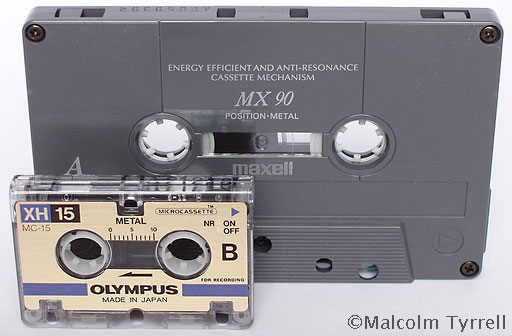 There were some cassette recorders available at the time, although they were not designed for the general public. Sony called theirs Pressman and marketed it exclusively to reporters. These recorders lacked stereo sound and were very expensive. They also used (typically) microcassettes, which had no support from record companies (and were expensive to boot).
With the limited choices presented to consumers, the most popular cassette tape players were either home stereos or car players.
Sony Enters the Market
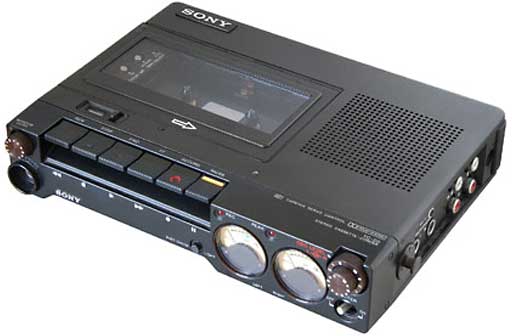 Sony’s first stab at the personal tape player market came in 1978, with the TC-D5. It had excellent quality sound (surpassing most desktop players) and was easy to operate. Unfortunately for most potential customers, the price was around $1,000 (¥300,000), and it was hardly portable.
One regular user was Ibuka, then Sony’s honorary chairman. He used the player on airplane trips, but he found the player too heavy for everyday use. He instructed the tape recorder division to create a smaller version for his personal use.
The division, led by Kozo Ohsone, modified a Pressman to do the job. They removed the record function and added stereophonic sound. Ibuka was immediately impressed and suggested that they bring a similar item to market.
By 1979, Sony’s tape recorder division was flagging. There was little demand for their high-end products, while products from competing lines succeeded (boom boxes, etc.). In February 1979, Morita, the company’s chairman, encouraged the engineers to develop a player similar to the one they had developed for Ibuka. But this one had to cost less than ¥40,000 yet provide the same sound quality. He wanted the product by June 21, 1979.
Though he was skeptical that the division could create a player so quickly, Kozo Ohsone was eager to avoid having the division consolidated into another division (Sony was going through a reorganization at the time) and quickly designed a portable tape player based on Ibuka’s modified Pressman player. They used lower end components to bring the price down and encased it in a small, stylish enclosure.
The Right Name
There was a problem: The device didn’t have a name. Ohsone suggested that they use the name “Walkman”, a play on the Pressman, but the company’s leadership was skeptical. The name sounded like a straight Japanese translation, and they feared it would not catch on in the US and Europe.
Several other names were suggested. Walky was the most popular, but none were as memorable as Walkman, so the name stayed.
Morita was worried that the device wouldn’t appeal to the young or active because of the headphones. They were far larger than the player (they weighed more than 400 grams) and were more like earmuffs than today’s headphones.
Three years before, Sony engineers in another division had designed a lightweight pair of headphones. They eliminated the large, enclosed earpiece and in its place put soft foam. Ueyema decided that he could make the Walkman more of a personal player by including these smaller headphones. A listener could now use a tape player while in motion without disturbing those around him or her. The new headphones weighed around 50 grams.
Enter the Walkman
On June 21, 1979, the Walkman was announced to the public.
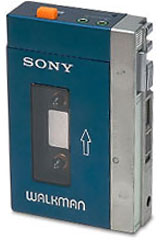 Before the new player was available to the public, the press lampooned it. Some claimed that nobody would be interested in a tape player without a record function. Others pointed out that the most popular tape recorder of the time had sold less than 15,000 units, and Sony had produced 30,000 units.
The company was unfazed by such criticism and pushed on with promotion. Sony distributed the player to young people and celebrities around Japan, generating demand.
To promote the device amongst younger Japanese, Sony hired young people to walk through the Ginza, offering passersby a chance to listen to the Walkman’s excellent audio quality.
Instead of having a conventional introduction to the press, Sony arranged a bus tour with actors throughout Tokyo posing with the Walkman while the reporters listened to a recorded tour.
A month after the Walkman became available in Japanese stores, it was sold out. The device was popular among all consumers, not just those under 20. Sony had succeeded at creating a personal audio player, and it prepared to launch the product in Europe and North America.
Earlier apprehensions about the name reappeared, and the marketing department decided to rename the product Freestyle in Sweden, Storaway in the UK, and Soundabout in the US. However, during a visit to Sony employees in Paris, Morita was asked by employee’s children when they could get their Walkman, so the Japanese name stuck.
In ten years, Sony sold 50 million units, and competitors had sold countless knockoffs. The term “Walkman” even entered our language, used to describe any cassette player, and it’s listed as such in the Oxford English Dictionary.
The brand lives on today, as Sony attempts (unsuccessfully so far) to translate their brand recognition into MP3 player sales.
This article was originally published on 2006.09.15.
Further Reading
- Walkman, Wikipedia
- “Please Listen to This”, Sony History
Keywords: #walkman #sonywalkman #lowendaudio
Short link: http://goo.gl/VGrcrZ
searchword: sonywalkman

The missing bit, Tom;
“The settlement grants Pavel the recognition from Sony that he was the original inventor of the Walkman; this apparently could only be achieved after the death of Akio Morita, the founder of Sony and previously-recognised creator of the personal stereo.” Wikipedia > Andreas Pavel.
Stuart Saunders,
Intellectual Property Rightful Owners Action Group.
reform@iproag.org