
1998: I miss the little guys.
You may remember them. The original Macintosh (just Macintosh, no other name or model number). The 512K and 512K enhanced. The Plus. The SE and SE/30. Then the Classic and Classic II.
Nowadays we call them the compact Macs, but in the beginning they were the only Macs. And the creative ideas people came up with!
- Mac Rescue designed a board that put 4 MB RAM and a 2 MB RAM disk in the earliest compacts.
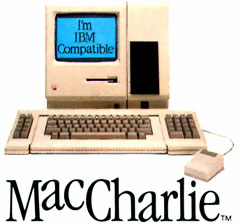 Dayna figured out how to add an 8088 CPU, 5.25″ floppy drive, and function keys, creating MacCharlie, the first DOS compatible Macintosh.
- The upstarts at Radius figured out how to install a video card and run wires to an external full-page black and white page-sized monitor.
- Apple put expansion slots in the SE and SE/30. Today it’s possible to run an SE/30 with a 40 MHz 68040 CPU, 128 MB RAM, and a multi-gigabyte hard drive.
- And in the end, Andy Ihnatko figured out how to gut a compact Mac and turn it into a Macquarium.
Alas, Apple killed the little guys. For a while they had bigger, colorful siblings, the slightly larger Color Classic and Color Classic II (the latter only in the Asian market). These had a 10″ color screen and a slightly larger case – and were never accepted by old timers. Compared with the originals, the Color Classics seemed overgrown.
Students loved the littlest Macs because they fit so comfortably in their dorm rooms. Network managers loved the SE/30 because it made a great server and didn’t require a separate monitor. And a lot of us just liked the fact we could pop them in a bag and tote them between work and home.
Nice as color and large monitors are, there’s something special about the Macintosh experience on a tiny screen with just two shades, black and white.
I’d like to see Apple introduce a new compact Mac, a worthy successor to the SE/30. Keep the footprint identical to the originals, reintroduce the 9″ b&w monitor (tack sharp!), but perhaps make it a couple inches taller and provide space for an internal Zip drive or CD-ROM.
Borrow some ideas from newer models.
- 1-bit through 8-bit video on the internal screen.
- A slide-out motherboard, like the Color Classic.
- A PCI slot for adding external video.
- A comm slot or PC Card slot for adding a modem.
- Ethernet standard.
- PPC 603e or 750 (G3) CPU on a ZIF socket for easy upgrade.
- If it helps keep the size or cost down, an external power brick like PowerBooks use. (This would also reduce heat.)
- EnergyStar circuitry, plus a switch for turning off just the monitor.
- Make floppy, Zip, and CD-ROM drives optional – and plug-n-play into an internal drive bay (or two).
I’d love a little powerhouse that I could take to work, to school, to the library, and back home again. Hook it to a color monitor some places; use the internal screen in others. It would also make a great server.
And if Apple did it right, it could share a lot of components with the 5000 series and other Macs. It could be one way to approach to the $1,000 market.
- There’s something special about a friendly little computer that smiles when it wakes up.
I miss those little guys.
This article was inspired by Don Crabb’s “The Perfect Little Mac” (sadly no longer online). He calls his idea The New Mac, a color successor the the compact Mac heritage. I recommend you read his article to see how Apple could think different about reaching the low-end market.
Further Reading
- Fixing iMac
- iMac: a Second Look
- iMac: Nearly Perfect
- No $500 Mac this year
- Gee3: Let’s Have an Inexpensive Mac!
keywords: #compactmac
short link: https://goo.gl/7XNqnj
