
Ever since Apple announced the iPad on January 27, 2010, people have asked, “Is the iPad a PC or not?” There has not been a clear-cut answer.
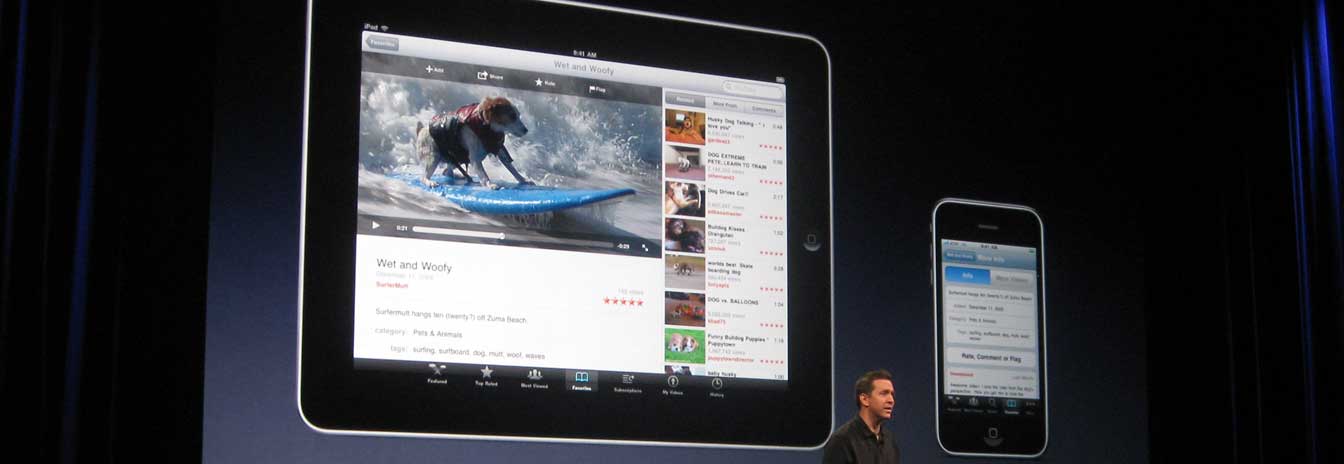
One camp says that is it a PC, because it has a CPU, a display, accepts user input, has an operating system, and runs application software. (By this definition, a smartphone is also a PC.) The other camp says that it is not a PC, because it doesn’t run a desktop PC operating system or applications.
Personal Computing History
Let’s look back 35 years to the early days of personal computing. There were mainframe computers and mini computers and those newfangled things known as home computers, hobby computers, small systems, or personal computers. Unlike minis and mainframes, they were single-user devices, so they didn’t fit the paradigm of computers as powerful devices with operating systems and software that served multiple users. Yet there was no denying that they did the same kinds of work as multi-user computers, and over time the label personal computer (or PC) became dominant.
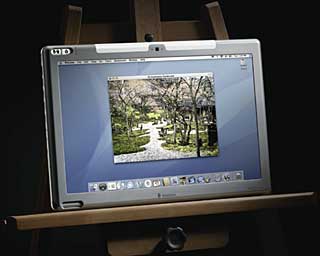
Axiotron Modbook
There have been tablet PCs, personal computers (mostly running Windows, but also the Modbook, a highly modified MacBook) with touchscreens that ran desktop operating systems and applications. There was no denying that these were a variant on the personal computer, and nobody objected to their being classified as PCs.
We’ve had the iPad for nearly two years. It has everything that typifies a personal computer: a CPU, graphics, system memory, bulk storage, a display, an operating system, and application software – and it accepts user input, whether by touchscreen or a Bluetooth keyboard.
No, it doesn’t run Windows or Linux or Mac OS X, but its operating system is based on Mac OS X, albeit heavily modified for a touch-based environment and with most of the multiuser and multitasking functionality stripped away. (Remember, early PCs didn’t support multiple users or multitasking either.)
iOS is not a desktop operating system, and iPad apps are not desktop software, but iPads can do the same kind of work as desktop, notebook, and tablet PCs.
Whether we’re using a hardware definition or a functional definition, the iPad is a PC – a personal computer.
And so is the iPhone.
What About Smartphones?
From the start, it’s been obvious that smartphones are also personal computers, just as personal digital assistants (PDAs) were before them. Apple’s Newton was a PC. Palms were PCs. Handheld Windows devices are PCs, whether the operating system is called Windows CE, Windows Embedded, Windows Mobile, or Windows Phone. They have CPUs, run applications, accept user input, and display their output. In terms of hardware and function, they do what PCs do, and to deny them that label because they don’t run a desktop operating system is as wrongheaded as saying that the Apple II wasn’t a real computer because it wasn’t a multi-user multitasking machine like a DEC VAX.
While some analysts love to distinguish between smartphones and media tablets and PCs, in reality smartphones and “media tablets” are just subsets of the PC. Both can be distinguished from PCs by their dependence on a touchscreen and battery power, but whether from a hardware or a functional standpoint, there is no denying that they are types of PCs.
Smartphones are easy to distinguish from traditional PCs because they are designed to function as mobile phones. There’s a simple hardware and functional way to define this subset of PCs that distinguishes them from traditional PCs (most of which can also be used to make phone calls and do video conferencing these days).
The ‘Media Tablet’
The so-called media tablet is neither smartphone nor traditional PC. It almost invariably runs an operating system optimized for touch input and portable operation, whether that’s Android (based on Linux), iOS (based on OS X), or Windows Phone 7 (based on – you guessed it – Microsoft Windows). Saying that the iPad is not a PC because it doesn’t run a desktop operating system is akin to saying that Macs are not PCs because they don’t run the Windows operating system or Windows software, which was far more true in the era when Macs were not built around Intel CPUs.
Just as it’s ludicrous to say that Macs aren’t PCs simply because they run the Mac OS, it’s silly to claim that the iPad, Android tablets, and forthcoming Windows 8 tablets aren’t PCs because they don’t run a desktop operating system. That’s an artificial distinction based neither in hardware nor functionality.
I won’t deny that media tablets, as they now label these things, are different from traditional PCs. They run operating systems optimized for touchscreen input, where today’s desktop operating systems are optimized for keyboard and mouse or touchpad input. (Once upon a time, we had PC operating systems that didn’t use mouse input, and DOS users tried to paint Macs as a different sort of thing because of their graphical user interface – and then came Windows. But that’s a different story for a different time.)
The tricky part is going to be defining the place of the iPod touch and 5″ mini-tablets. Should they be viewed as real tablets, or does their tiny screen size and pocketability place them in a subcategory of their own?
Why It Matters
In the mid-1970s, analysts were right to create a new category for personal computers. Whether it was an Apple II, Commodore PET, TRS-80, or something else, this new type of computer was not being purchased to replace mainframes and mini computers. It was a distinct category of computer that could be easily distinguished (back then) as a single-user, non-networked device.
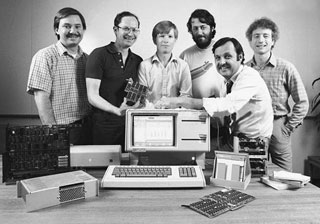 Things have been a bit fuzzy since then. Notebooks created a new category distinct from desktop PCs, and Macs (well, technically the 1983 Lisa) created a new category for GUI-based personal computers, but because most notebooks ran the same operating systems as desktops, and because PCs moved from DOS to Windows over time, laptops and Macs were recognized as part of the PC market. The same goes for Tablet PCs, a very small niche market for touchscreen PCs running the same operating systems as their desktop and notebook counterparts, just modified a bit for touchscreen input.
Tablet PCs have never been a significant enough part of the market for analysts to care whether they should be categorized as PCs or separated out as tablets, but when the iPad arrived, analysts had to scratch their heads and wonder, “Are tablets a distinct category, or are they just another type of PC?”
How about we answer both.
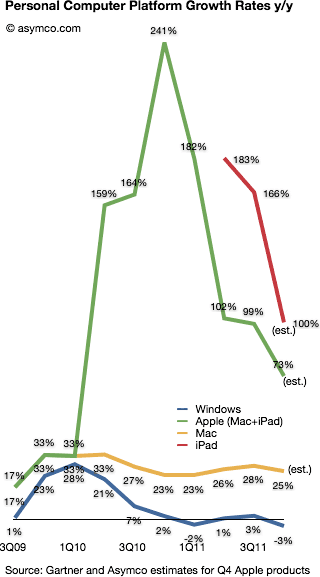
Just as smartphones are a subset of mobile phones and notebooks are a subset of PCs, tablets are a subset of PCs. In looking at the overall PC market, analysts would be foolish to ignore tablets, because people are buying them and using them for the same things they do with PCs. The iPad and, to a lesser extent, Android tablets are cutting into PC sales, as you can see in the graph from Asymco (right) showing Windows PC sales in decline at the same time that people are buying Macs and iPads in unprecedented numbers.
Tablets Will Dominate
Just as notebooks created a new category of PCs that went from a niche market to becoming the dominant type of PC, tablets have created a new category of PCs that has exploded and threatens to significantly cut into the traditional PC market.
That said, tablets are a very distinct subset of PCs, and analysts would be foolish not to realize this. People are buying tablets to do PC work (and play) in ways and places where traditional desktop and notebook PCs are less suitable tools. Tablets are going to change the way we work with our computers, and for a lot of people, they are going to be all the computer they need, especially when tablets get really solid support for keyboards, external displays (either a computer monitor or a TV), and non-touchscreen pointing devices – an area where the iPad definitely has room for improvement.
In the years ahead, we are going to see the traditional PC market shrinking as more and more users discover that they don’t need Windows, Linux, or OS X with all of their power, sophistication, and complexity. They just need to do one thing at a time, and a tablet lets them do that practically anywhere. Over time it could become the most significant part of the PC industry, especially if it can be docked to a keyboard when you need to do some serious word processing, database, or spreadsheet work.
Update: Microsoft further confused the issue of desktop vs. touch-based operating systems when it released the Surface RT tablet in late 2012. It ran its own version Microsoft Windows 8 with an ARM processor – just like the iPad and Android tablets. It was a desktop OS with touch, but because it didn’t use an x86 CPU, it couldn’t run desktop software. And to further confuse matters, Microsoft simultaneously released x86-based Surface tablets, which can run desktop apps. The ARM-based Surface RT line never caught on and has since been discontinued, but the x86 Surface is universally categorized as part of the desktop/laptop category, not the tablet category. (For my early thoughts, see Microsoft Surface Is Destined to Be a Best Seller.)
Keywords: #ipad #personalcomputer
Short link: http://goo.gl/abhoIr
searchword: ipadisapc
