
PC Magazine’s Lance Ulanoff says, “Macs are PCs, dammit!” He then goes on to explain that the “PC” at PC Magazine stands for personal computer.
I am not convinced.
You see, I was there when the first IBM PCs reached the local ComputerLand store in 1981. And I know that was not the birth of the personal computer industry, which sprang up with the introduction of the first prebuilt (vs. kits) “home computers” in 1977.

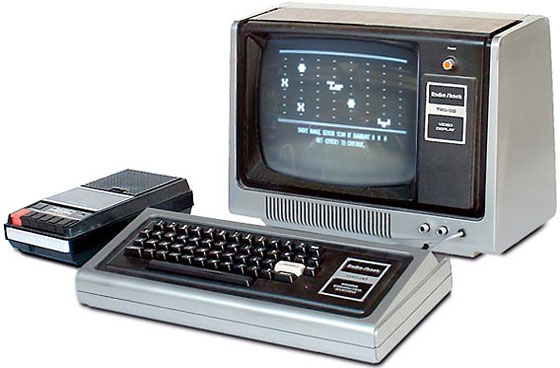
Remember the Commodore PET? The Tandy (Radio Shack) TRS-80? The Apple II? They were all introduced at the West Coast Computer Faire in mid April 1977. They were all shipping four years before IBM entered the world of personal computing. And by 1980, other companies such as Osborne, Kaypro, and Atari had entered the PC world.
Back then we had magazines that covered the whole spectrum of computing: Byte, Creative Computing, and Compute! among them (I read them all). And we had platform-specific magazines, such as Softalk and Nibble for Apple II users.
Enter the IBM PC
 This was the world the IBM PC entered in August 1981, and it set the stage for PC Magazine, which began publishing with its January 1982 issue. Despite Ulanoff’s assertion, the focus was always on the IBM PC and compatibles (called “clones” in the early days).
As Cheryl Woodard, one of the magazine’s founders, tells things, “All of us wanted to be the first ones out the gate with an IBM PC magazine.” The IBM PC created a new “open” platform that anyone could develop software and hardware for, and the “editorial mission for PC Magazine was to provide users with unbiased advice about choosing among all of the products available to them.”
While the magazine may have peripherally looked at other platforms from time to time, it has never been a magazine for the wider personal computer field; it has always specifically covered the world of computers rooted in the original IBM PC’s legacy.
Although Ulanoff may not want to admit it, between the late 1970s, when PC covered the whole field of personal computing, and now, the definition has changed. IBM helped that along by naming its first personal computer the IBM PC 5150. The whole world just called it the IBM PC, and when the clones came, they were called PCs as well.
In the minds of the public, the PC label came to mean a computer that ran MS-DOS – and later Windows. It meant a computer with x86 architecture. If a computer was built around a Motorola 680×0 or PowerPC or SPARC or Alpha CPU, it wasn’t a PC. If it was built on x86 architecture but not compatible with DOS or Windows, it wasn’t a PC. It was something different.
The growth of Linux hasn’t really changed things. Although Linux can run on many different hardware architectures, when you buy a Linux PC, you’re buying a computer that could run Windows but instead has Linux installed. You can buy a copy of Windows and install it on these Linux PCs, turning them into Windows PCs.
Why the Mac Is Not a PC
The Macintosh started out on the Motorola 680×0 family of processors, migrated to PowerPC architecture in 1994, and switched to x86 architecture in 2006. And during the Mac’s 24 year history, the hardware has always been designed to run the Mac OS and no other operating system.
Macs have been able to run Windows using x86 cards and software emulation, and more recent Macs can run Windows alongside the Mac OS with virtualization – and even boot directly into Windows using Apple’s Boot Camp software. But that doesn’t make them PCs in the way the rest of the world uses the term – and the way Apple uses it in its ads.
The Mac Is a Personal Computer
If anything, it would be nice if the Mac were seen as a personal computer – in contrast to an impersonal one.
Despite its name, the IBM PC was designed for the office, not the home. It was “personal” in that it had its own CPU and wasn’t a terminal dependent on a minicomputer for processing power. It was designed for word processing, spreadsheets, and databases, and the standard business configuration included a green screen display and a text-only video card. You had to learn DOS to use the programs, and productivity software came with huge manuals. And if you wanted low resolution color graphics, you had to use a different video card and display.
Contrast that with the Macintosh, which came to market several years after the IBM PC and MS-DOS. It wasn’t designed for a text-only world – when it handled text, it did so with finesse. On the Mac, you could actually see different fonts on the screen in different sizes and with different attributes (bold, italic, etc.). And you didn’t need to learn cryptic key commands that varied from program to program, as in the world of WordPerfect, Lotus 1-2-3, and dBase II for DOS. You could use the mouse, easily select text, and pull down menus to see what your software could do. You were free to explore and experiment.
Where the PC world excelled at business correspondence and number crunching, the Mac let you express yourself creatively. Unlike the business computers of the PC world, Macs really were personal computers.
Microsoft Saw the Future
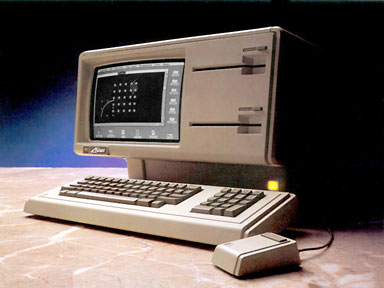 Bill Gates understood the revolution the Macintosh would create, as Microsoft was one of the earliest developers for the platform. Microsoft began working on a text-based windowing environment in September 1981, incorporated pulldown menus in 1982, and first announced Windows to the world in November 1983. This was 10 months after Apple announced the Lisa and just two months before Apple would unveil the Macintosh (which Microsoft already had behind closed doors for software development).
Lisa and the Macintosh changed everything: The future was going to include a graphical interface and a pointing device. Microsoft’s genius was designing a graphical shell for MS-DOS that could run on existing PCs, as long as they supported graphics. Windows 1.0 finally shipped in November 1985.
It wasn’t until 1990 that Windows became a major player on PC hardware, thanks to Windows 3.0, and the rest, as they say, is history. Compared with the Mac, Windows was clunky and inelegant, but the fact that it ran on hardware that businesses already owned and let them run DOS software they already owned made it easier to slowly migrate to Windows than to switch platforms completely.
The big difference is that Windows was designed for business computers, although it adapted well to home use. This is demonstrated by the fact that for years Microsoft has sold a less capable version of Windows for home use and a more expensive, full-fledged edition for business.
Empowerment
Apple has never done that. While there is a server version of Mac OS X, there are not separate home and office editions. Apple sees no reason to remove features or offer several different price-tiered versions of its operating system. Every Mac user gets the whole enchilada.
The PC world has generally been about productivity, although there is a huge subset of gamers who are more interested in frames-per-second 3D graphics. The Mac world has always been about expression, creativity, unleashing and empowering the user. It’s great for productivity, but the focus is more on the user experience than just getting the job done.
While we have many of the same programs on both platforms, in general Mac users work differently than PC users. We tend to use more programs. We tend to have more windows open. We tend to enjoy working with our computers. And we tend to become attached to them. Many of us love our Macs, and our numbers are growing.
Ulanoff may want to rewrite history (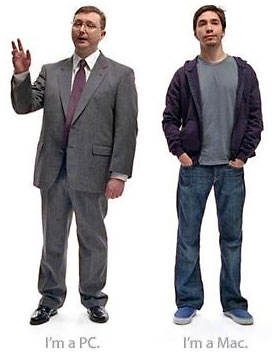 at least for the magazine he oversees) and decry the way the PC label has gone from meaning personal computing to meaning a specific range of computers, but the simple fact is that while the Macintosh is a personal computer, the world knows that it is not a PC.
And every time we see an “I’m a Mac” ad, we just know it.
searchword: macnotapc

You explain “Why the Mac Is Not a PC”
you also mention that “The Mac Is a Personal Computer”
but the link is missing, an article called something like “What is the difference between ‘PC’ and ‘Personal Computer'”.