
For all those questions that you have about what runs your Mac, here is the definitive article that explains it all. Here’s lesson number one; it isn’t a little mouse that runs around on a wheel, it’s a ferret, on speed.

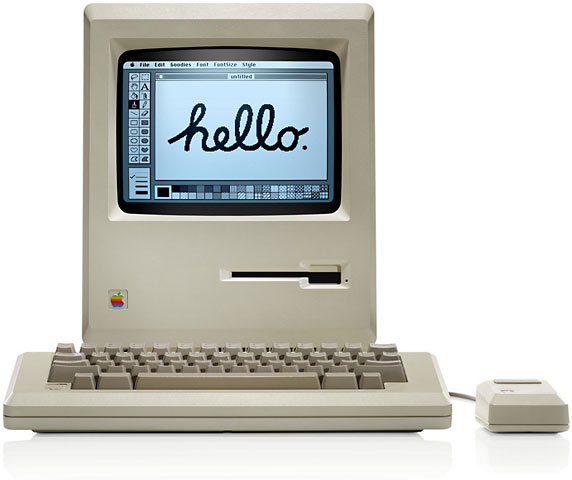 The very first Macs ran on a 68000 chip. It started at 5 MHz and topped out at 16 MHz. The Macs that had this chip included the xxxK series, the SE, and the first Mac laptops (the Portable and the PowerBook 100).
The 68020 and the 68030 were very similar chips that ran from 16 MHz to 40 MHz. Some of the Macs with these processors came with a standard FPU (like the PowerBook 170 and the Macintosh IIci) and some had these optional(like the Performa series). This series also included the very computer I am writing this on, the second in the Duo 200 series, the 230.
The last line in the 68k series, the ‘040, was very versatile. Most of them were various Quadras (Quad referring to the four in the chip number), however there were several models of Centrises and a few servers, not to mention the PowerBook 550. The reason these chips were so versatile was because they had such a range of megahertz ratings. All the way from 40 MHz to 80 MHz. Also, with the exception of only four models, they all had an FPU, and of the four misfits, three had optional ones.
The PowerPC chip was the beginning of a new generation for the Macintosh community. It was blazing fast, and all kinds of fancy things became possible, like work (y’know, that stuff you do when you’re not standing in front of the water cooler, talking about the stupid human tricks on Letterman last night).
The 601 was the first of the the PowerPC line. It started at 40 MHz and eventually came to an amazing 120 MHz. Macs included in this line were the Performa 611x, the Power Mac x100, x00, and several workgroup servers. The following chip, the 603 made leaps and bounds over the 601. The 603 itself never exceeded 75 MHz, but it’s sister, the 603e, did wonderful things for the Mac. It started at 100 MHz and ran all the way up to 300 MHz with the PM 6500. However, due to certain idiosyncrasies of the chip architecture, a 233 MHz G3 still exceeds it.
The 604 and 604e was similar in their speed ratings to it’s predecessors, but the big difference was in the L1 and L2 caches. The memory here was doubled from 16 KB and 32 KB to 32KB and 64 KB in the L1 caches. The L2 caches were also doubled from 128 KB and 256 KB to 256 KB and 512 KB. A few models were even quadrupled to 1 MB. The MHz ratings for these guys went from 120 MHz to 350 MHz. The Macs listed here consist of similar model numbers to the 603s, the bonus here is that every one has a speed rating attached to it.
Now for out latest friends. The G3, a.k.a. the PowerPC 750. These are some of the most amazing chips ever. The misleading MHz rating will make you think that they’re not very fast. But, as I’m sure you’re seen and heard, they can beat the pants off of a PC with comparable and much higher ratings. The speed of these Macs go from 233 MHz to 400 MHz (see the story “New Toys at MacWorld Expo“). The G3 lives in several models like the lusted after G3 PowerBooks and popular desktop line, dare I not forget the iMac.
The Macs of the new millennium are going to run like you’ve never seen before. The G4 has all kinds of new goodies that will make your head spin (not to mention amaze that PC weenie across the hall). These chips will have 128-bit data paths (up from 64-bit in the G3s of today), and a 2 MB backside cache (doubled from certain G3s). It will also use copper instead of aluminium so that instructions can move faster along the chip. Copper breaks the limits of current aluminium chips.
Sound fast yet? It gets better.
Now for the secret weapons: The G4 does something that the G3 could only dream of. It can link up with other processors to get more done. You know what they say, two disgustingly fast processors are better than one. Finally, the mother-load, the AltiVec unit. Most new computers have two processing units, an FPU and an integer unit. The new G4s come with a new processing unit, the AltiVec.
It behaves like MMX, with one exception – it blows MMX out of the water. It provide acceleration in most multimedia actions (images, video, and sound). In fact, Motorola says that AltiVec can make actions such as these up to 16 times as fast as they execute now. What you’re left with a chip that startsat 400 MHz.
This history of the engine inside Macs has shown something very important. Your brand-spanking new computer is obsolete in three months. You’ll be yearning for more speed in about a year. Any new computer is the hottest fastest thing. Speed will always be relative, computers will always take advantage of new code and technologies forcing your Mac into the closet of forgotten computers. As a single parting note I’d like to remind you that the PowerBook 100 blew people’s minds because it ran at 16 MHz, twice the speed of an SE. Just a little food for thought.
Brad isn’t dreaming of G3 towers anymore. No, now he’s thinking of Yosemite Macs. No, now he’s too good for 300 MHz 🙂
Go to the Menagerie of Macs #3 home page.
