
The Low End Mac Mailbag
Switching to Windows, Angry About OS X, Upgrade Pricing, Kanga, Apple and Intel, and More
Dan Knight - 2003.03.31 - Tip Jar
- Sticking with the Mac or Switching to Windows?
- No Upgrade for Me
- Angry About OS X
- Upgrade Pricing Pattern
- It's the Cost
- What 10.2 Update CD?
- Best OS for Kanga
- Beige G3 Slaves, OS X on a C600
- More on Kanga
- Apple and Intel
- Jaguar Clean Install from Upgrade CD
This is the mailbag column I was working on last Thursday morning when my hard drive developed problems. (Details on that in A damaged hard drive can ruin your whole day - hooray for backups!) dk
Sticking with the Mac or Switching to Windows?
In response to Jaguar Today, Panther Tomorrow, and Another Slap in the Face?, Randy Marshall writes:
I enjoyed your article, and especially the content about the widening gap between Mac OS 9 and Mac OS X users.
As one of the people who develop for Mac and who has been severely betrayed by Apple and their lack of ethics, I am definitely on the fence about where I will go personally in my computing future. Apple has proven to me that they are the most unethical company that has ever existed. (They are far worse than even Enron)
Setting that issue aside for this post to you, I am not sure if I will upgrade to this next version of Mac OS X (I am using 10.2 on my editing system and feel it is the worst OS product I have ever used - even worse than the Windows 3.1 on an old Wintel machine I had).
My next computer purchase will probably be a portable, and though Apple still makes nice portables, because they treat users like dirt, I just do not know if I will be able to give them any more of my money. Add to this that I have been actively playing with and learning Windows XP - and that Windows XP is a far more robust and universal product than OS X - I am given pause to consider what path will best suit me in my own computing future.
Are you going to stick with Apple in your future computing purchases?
If so, why, if not, why?
Do you have any more thoughts on the subject base on your own personal experiences?
Yes, I'm going to stick with Apple. As much as OS X has slowed me down in comparison to OS 9, at least I know my way around. Despite Aqua being a very different looking interface, I can see drives on my desktop and drag files between folders.
At my other job we use Windows computers. I wanted to copy a file from a CD to a floppy for a customer. The only way I could figure out how to do it was to find the JPEG file, open it from the CD, and then save it to his floppy.
I'm sure seasoned Windows users would laugh at me - there has to be a better way - but that's the kind of disorientation Mac users find when going to Windows. Linux may be better with the right interface, but either way, if I switch I lose all the Mac software that I depend upon for my work.
Bad as Apple can be, it's not as bad as the Beast of Redmond with their insecure computing tradition, abundant selection of worms and viruses, coercive licensing policies, and other monopolistic practices.
From all I've heard Windows XP is pretty solid, but it's still a Microsoft product. That's one monopoly I try not to support.
No Upgrade for Me
Eric Cohen writes:
Great article Dan.
I personally will not be upgrading. I own 3 copies of 10.2 (we upgraded all our systems at home this year, two new iBooks and a new TiBook). We will not go to 10.3 at all unless there is a significant discount.
Yellow Dog Linux was my mainstay on my WallStreet, and the continued "bleed your customer's dry" attitude of Apple will send me back to Yellow Dog before you can say "Pay me another $129 to keep playing."
Angry About OS X
Tony Torres shares his thoughts:
I couldn't agree more. Personally, I've had enough of Apple and OS X. My Jaguar system recently started locking up regularly and having problems such as the clock, volume control, and display menu not showing up in the Menu bar after rebooting and not returning even when you turned them back on in system preferences.
I attempted to reinstall 10.2 from my install CD with the intention of doing an archive and install option so I could start over but gradually transfer my old stuff over. At the time I was running 10.2.4.
Well, when I attempted to reinstall the installer informed me that I could not install it because I had a newer version of OS X on my system. I see no reason why it couldn't have offered me the option of an archive and install option even if I couldn't install 10.2 over 10.2.4. So I'm basically faced with the task of reinstalling 10.1 from my retail CD and then using my 10.2 CD to install it (it's an upgrade CD).
I've decided to say screw you to Apple and OS X. After Apple's inability to keep up with even bus speeds of PCs lately, their .mac screw-the-supportive-fans strategy, and the lack of an upgrade price for 10.2, I was seriously considering even returning to Windows (I'm a former Windows user), but after observing several friends have problems I used to encounter and have never encountered on my Mac, I dropped that idea.
Ironically, surfing the Web using Opera on Windows 2000 in VirtualPC 6 in OS 9 is faster than every browser in OS X (including Safari and Chimera) on my B&W G3 upgraded to a G4/550. I've returned to OS 9.2.2, and that is where I'll stay for the time being.
When it comes time for me to get a new computer, I will then return to OS X and probably only then. I hope that by the time I return to OS X Apple will have made it as easy to repair/reinstall an OS X install as it is to restore/repair/reinstall a Classic Mac OS install.
Sorry for the angry tone of my letter.
No need to apologize. As I mentioned in Wednesday's mailbag, Apple has become an expert at alienating their customers. The mock funeral for OS 9 was an unnecessary insult to the millions of Mac users who haven't yet migrated to OS X.
OS X has a lot going for it - Unix stability topping the list - but it also has its share of problems. It's slow. It's bloated. It's slow. It's got a slow GUI. It's slow. It's a resource hog. And, in case I hadn't mentioned it, it's slow.
This is the same kind of bloat Microsoft has been adding to Windows to get people to keep buying newer, faster computers with newer, more costly versions of Windows installed, so they can then add newer, most costly, more bloated versions of Microsoft Office.
Looking at OS X and the abominably slow performance of Apple's Mail application (which I now use for four of my email accounts), I'm appalled. Safari is a fast, competent browser. AppleWorks isn't as speedy as it used to be before version 5 and before OS X, but it's adequate. My X-native version of TextSoap is much slower than the classic version.
Fortunately, I do a lot of my work in classic applications - Claris Emailer, Claris Home Page, BBEdit Lite 4.6, Photoshop 5.5, WebChecker, and Mizer among them - so OS X doesn't slow me down too much, and Safari seems as fast a browser as any I've used on the Mac.
Still, for the first time since System 7.0, Apple has created an operating system that's barely usable on the oldest supported hardware. It has to get better; I don't plan on replacing my 400 MHz TiBook for another year.
Upgrade Pricing Pattern
Sam Griffith Jr. writes:
The topic of upgrades vs. new feature rich versions of the OS is discuss in great detail on Slashdot in the Apple section. I've included a link for you to look at that may help you appreciate that Apple is being consistent with past upgrade pricing and approaches.
http://apple.slashdot.org/comments.pl?sid=58150&cid=5582051
I hope this link is informative and may help with your feelings about paying for upgrades.
I myself buy the upgrades and think of it as a approximately $10 a month charge that I'm paying. I liken it to what I pay for my phone service (which is more than $10 a month) and think that I get a greater value for the dollar with my OS than with the phone as a whole, the computer gets more use than the phone. I also know that this money goes to fund/buy companies that will help Apple grow in installed base and in new areas and also continue to be able to develop very nice software for us users like iMovie, etc.
Mostly, though, I think of it like the phone, cable, sewer, etc. I'm paying for a monthly service and each year I get new features added on if I want to continue with upgrades to my service, and if not, then I can continue to use at no additional cost to me my old service features indefinitely.
Thanks for the site and your opinion. I hope my thought may sway you in thinking that we are really getting a pretty good value for our dollar.
The Slashdot articles show a fairly consistent pattern of Apple charging for one upgrade and making the next free, something covered in yesterday's mailbag. Then again, Apple had a pattern of not charging for OS updates until System 7.1 arrived, so we can't depend on past patterns predicting future behavior.
Pattern is not policy, and Apple has never stated what their free vs. fee update policy will be in the future. We can assume incremental updates (10.2.3 to 10.2.4) will be free, but beyond that it's speculation whether Apple will charge for Panther or offer it for free.
I like the way you frame this as a $10 a month charge. Put in that perspective, it seems more reasonable than having to fork out $129 all at once - then again, Apple doesn't let you pay for OS X in installments.
It's the Cost
J. M. Dennis writes:
I agree with your article about Panther. I have not upgraded to Jaguar because of the cost. I paid for the beta, and when it came out, I paid for version 10. I then paid for 10.1, and like you I would like to do a clean install.
I would have bought Jaguar if they did not expect me to pay the full price for it. I should not have to pay any thing for point increases. I have a Rev B iMac and a WallStreet, so I will not be upgraded beyond a certain point.
Sure I would like to upgrade, but I do not have the money, and I do not like having to pay full price for software.
I wonder how many people are thinking of switching to Windows because of this. As Windows gets better and machines on the Windows side get cheaper, then why should people stay. I have even thought about putting Linux on my machines as that would speed things up, and I could download and burn my own CD.
OS X runs fine on my machine, but I know that with each update it will get slower.
I also do not like the fact that I can not use the full hard drive I have because the ROM does not support it. You think that Apple would do something about this for those of us that have older Macs that want to run OS X. I realize that I can partition my hard drive, but I would rather just use my whole hard drive without having to partition.
As things get more and more expensive to run Macs, I will think about switching. I will just switch to Linux, as I do not plan on buying a Windows machine like some former Mac users I know have done.
My last big Apple purchase was a $2,600 TiBook two years ago. At the time, I had no idea how the dot-com collapse would impact Low End Mac. I already had the OS X beta, but I still had to buy 10.0 when it came out. The only reason we have three OS X licenses at home today is that my wife's 14" iBook came with it preinstalled, a local dealer was kind enough to donate a copy of the 10.1 update, and a member of one of my mailing lists gave me the Jaguar update he no longer needed after buying a new Mac.
It's unfortunate that your Macs date from the transitional period to the NewWorld ROMs and require to you create an 8 MB partition on your hard drives if you want to run OS X. I don't understand why a problem that didn't exist with the classic Mac OS manifested itself under OS X and requires this type of partitioning on beige G3s, WallStreets, and early G3 iMacs, but I'm also sure that if Apple could solve the problem, they would have done so by now.
As for OS X getting slower with each update, I think Apple is managing to do just the opposite and improve the efficiency of the OS with each major revision. Jaguar is tolerable on my 400 MHz TiBook, but I was never able to live with OS 10.1.5 and earlier for more than a day or two.
I'd hate to switch, since I have so much time invested in mastering the Mac software I use. But I don't expect to be able to jump on the next OS X upgrade right away, either.
What 10.2 Update CD?
From another email from Doug Petrosky:
You also, mentioned a 10.2 update? How or where did you get such a thing? The fact that 10.2 is a purchased upgrade means it is a full installer.
As for the 10.2 update CD, that's what Apple sold to those who had purchased a Mac or a copy of OS X 10.1.x within a certain date range prior to Jaguar shipping. It is not a full installer; it only works if OS X is already installed on your hard drive, and it's currently available from some online vendors. Jeff Adkins covered this territory in Problems Upgrading to 10.1 to Jaguar last November.
Best OS for Kanga
On a completely different topic (whew!), Andrew Main writes:
I had a PB 3500 for about
a year, and liked it quite a lot. However, the larger display of the
later G3s seduced me away 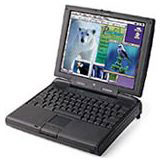 (my next PB
was a Lombard, and now a
Pismo running
OS X). I would consider the display size/resolution of the 3500
its major drawback - too small for comfortable Web viewing or page
layout, limiting its best use nowadays to a very fast word
processor.
(my next PB
was a Lombard, and now a
Pismo running
OS X). I would consider the display size/resolution of the 3500
its major drawback - too small for comfortable Web viewing or page
layout, limiting its best use nowadays to a very fast word
processor.
I've never seen the point of putting the newest software possible on a computer, which strains its capabilities; any model will be most satisfactory in performance when it has plenty of headroom above what it's commonly asked to do. The 3500 came originally with 8.0 (I still have the CD); so OS 8.1 would seem best for the 3500, 8.6 at the max. I'd put ClarisWorks 4 or 5 on it to provide not only word processing but a good suite of other capabilities.
As for memory, the 3500/Kanga can use the same RAM cards as the 3400, which shouldn't be impossible to find used. However, there was an odd limitation - some (not all, but I don't know any way to tell other than trying them) 3400 RAM cards above 32 MB (e.g. 64 MB) would be seen by the 3500 as only 32 MB. (When I had my 3500, I found a 96 MB 3500-specific card, very rare, that gave me 128 MB total.)
Anyway, it should be possible to find a 3400-type 32 MB RAM card to put in a Kanga, giving it 64 MB total, about all that should be necessary for what that model is now good for.
I've never used a Kanga, and different readers are telling me different things about which OS is best on it. That's fine - we're Mac users, we don't all have to be on the same page. Fortunately most older Mac software isn't very picky about what OS it works with, so I'm still using programs from years and years ago on my TiBook.
I don't know what the market is for pulled PowerBook memory, but I suspect it's not large. As noted on Tuesday, Other World Computing has 128 MB modules available for a reasonable US$70 plus shipping, which will max out original PowerBook G3 very nicely.
Beige G3 Slaves, OS X on a C600
Terry O'Leary
I have two bits of news on older Power Macs. The first concerns beige G3s, and the second is about a clone (Umax C600) of the Power Mac 6400.
After much frustrating experimentation, I postulate that beige G3s can boot off of their slave ATA drives (if they have Rev. B ROM or later) in pre-OS X, but not in OS X. My experience with two beige G3s (non-Rev. A) is consistent with this hypothesis. How un-Mac-ish! Gone are the days when an address is just an address.
On a lark I tried installing an additional (slave [drive]) in my Umax C600. This machine has been running OS X.2.3 for quite some time, thanks to Ryan Rempel's XPostFacto. This clone is fortunate to have a ZIF slot in which I have put a Mactell 280 MHz. G3 with 1 MB L2 cache, and hence it can run Jaguar with pre-3.0 XPostFacto. Anyway, much like a beige G3 Rev. A, when you boot off X on a master drive, you can work with your slave drive.
I will end this note with an open query. I wonder whether it is possible to increase the utility of slave drives on these machines via open firmware. Perhaps someone more technically adept than moi can will answer this.
The ability to boot from a slave drive is one of the benefits of the Rev. B and Rev. C ROMs in the beige G3. This is nothing unusual; it's only the Rev. A ROM that doesn't support booting from a slave drive using the classic Mac OS.
Considering the slow 40 MHz system bus, so-so video, and severe memory limitations (144 MB maximum) of the SuperMac C600, I wouldn't have considered it a good candidate for OS X. Congratulations on acquiring one of those fairly rare Mactell G3 upgrades and getting OS X running on this vintage machine.
I don't know enough about open firmware to answer your question. Maybe some of the hardware gurus who visit Low End Mac can shed some light on it.
More on Kanga
Steve Lenius writes:
I read Low End Mac every day and occasionally write to you.
I am the proud owner of a Kanga (3500) PowerBook that I bought new when they first came out. I am still quite happily using it and it has never skipped a beat. I recently upgraded the 5-meg hard drive to a 40 meg 5400 rpm drive from Googlegear - best $132 I ever spent - and feel like I've gotten a new machine. It's eerily silent and seems much, much faster. I would recommend it to anyone with the original hard drive still in their Kanga.
When I bought it, I upgraded it to 96 megs of RAM (32 onboard plus 64 module), thinking that would be enough. And it was for awhile, but when I put OS 9.1 on it, things started to get a bit cramped, and I had to turn virtual memory back on.
With the new hard drive I don't notice any slowdown at all, but I still wonder if I should max out the memory while it's still available. When I saw that Other World Computing had 128 meg modules for $69.95, I almost jumped at it. But then I thought, what about using a Compact Flash card in one of the PCMCIA slots and having virtual memory swap to that?
Then I realized that if I did that I might be able to get a lot more than just 160 megs into the machine. And that way I wouldn't have to throw away the 64-meg module that's in the machine now.
Would this work? Would it work well? Would it be better than buying a stock 128 meg RAM module?
The only downside I can think of it that certain programs don't run with virtual memory turned on (such as Spin Doctor), and certain others, like Photoshop, would rather use their own memory manager.
I'd be interested in any thoughts you, your other contributors, or your readers might have.
Thanks again for a great Mac resource!
Yes, a fast, quiet hard drive can make a world of difference. I love the IBM TravelStar 40GNX in my TiBook, although it caused me no end of trouble last week. It's fast. It's quiet. It gave me breathing room for my files. I'd recommend a 5400 rpm hard drive with a big data buffer to anyone who is running out of drive space on their laptop.
Apple's technical specs for Kanga don't state how fast the hard drive bus is, only that it's an ATA interface. (For a brief introduction to ATA, IDE, and related terms, see ATA, IDE, EIDE and ATAPI Defined in Apple's Knowledge Base.) Without that information, I'll assume it's the same 16.67 MB/sec. drive bus used in the Power Mac G3.
The next question is how fast is the PCMCIA slot? Short answer: It depends. There are several different types of throughput standards:
- The original PCMCIA specification has a theoretical maximum throughput of 7.84 MB/sec.
- The later PC Card specification adds a faster mode that supports 20 MB/sec.
- CardBus adopts a faster, wider bus and supports up to 132 MB/sec.
Kanga supports the PC Card standard, which has a maximum throughput of 20 MB/sec. That's higher than the 16.67 MB/sec. ATA bus that the computer probably has. So using a Compact Flash card in a PC Card adapter could be faster.
That raises the final question: How fast is Compact Flash in comparison to your hard drive? Again, we have to say "It depends." Some CF cards are slow, and some are fast, just as some drives are slow and others fast.
I can't give you a definitive answer, but I suspect that even today's fast CF cards are probably slower than your hard drive. We're making a lot of guesses and conjectures here, but I'd lean toward the $70 memory upgrade and turning off VM as your first plan of attack. If that's still inadequate, then look into a 256 MB or larger Compact Flash card (as low as $60 these days) plus a PC Card adapter (under $15).
Maybe someone using CF can shed more light on throughput speeds.
Apple and Intel
After reading Apple Going Intel?, Ed Hurtley comments:
Okay, first, Intel VP Paul Ottelini was sitting at the front row of the most recent Macworld. And Steve Jobs gave the keynote at Intel's Channel Sales Conference a few weeks later. That sales conference is headed by Intel VP Paul Ottelini.
I used to work for Intel (for the division Ottelini runs) and still have friends there. One attended the conference and was floored at the appearance of Jobs. So he did a little digging. His boss reports directly to Ottelini and said that Ottelini and Jobs have been friends for years. They did this out of friendship, rather than because of any specific business relationship. My friend's boss also said that Ottelini has a wicked sense of humor (as we also know Jobs does), so it would be very likely that the two agreed to appear at each other's conferences just for rumor value.
I somehow wouldn't put it past Jobs to do something like this both for the shock value and to throw off the rumor sites. Switching the Mac to Pentium processors just doesn't make any kind of sense at all. (Mac OS X Server on Itanium could be an altogether different story.)
Jaguar Clean Install from Upgrade CD
Several readers explained that it should be possible to turn the Jaguar Upgrade CD (Part Number 2Z691-3854-A) into a full install CD by removing a single resource from one of the packages - just like with the 10.1 Upgrade CD.
I'm burning a disc to test this theory and will report back.
Join us on Facebook, follow us on Twitter or Google+, or subscribe to our RSS news feed
Dan Knight has been publishing Low End Mac since April 1997. Mailbag columns come from email responses to his Mac Musings, Mac Daniel, Online Tech Journal, and other columns on the site.
Today's Links
- Mac of the Day: PowerBook 190cs, introduced 1995.08.28. The last 680x0-based PowerBook could take a PowerPC upgrade.
- Support Low End Mac
Recent Content
About LEM Support Usage Privacy Contact
Follow Low End Mac on Twitter
Join Low End Mac on Facebook
Favorite Sites
MacSurfer
Cult of Mac
Shrine of Apple
MacInTouch
MyAppleMenu
InfoMac
The Mac Observer
Accelerate Your Mac
RetroMacCast
The Vintage Mac Museum
Deal Brothers
DealMac
Mac2Sell
Mac Driver Museum
JAG's House
System 6 Heaven
System 7 Today
the pickle's Low-End Mac FAQ
Affiliates
Amazon.com
The iTunes Store
PC Connection Express
Macgo Blu-ray Player
Parallels Desktop for Mac
eBay