
Although the Intel 8080 never ran MS-DOS, it is the direct predecessor of the 8086 and 8088 CPUs used in the first IBM PC. The 2 MHz 8080 was released on April 1, 1974 and formed the core of the first personal computers, the MITS Altair 8800 and the IMSAI 8080.
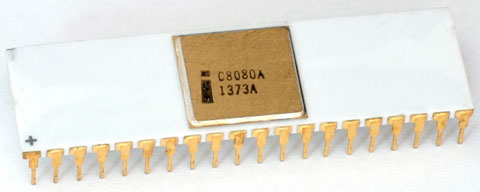 The 8080 is an 8-bit CPU containing 8,000 transistors and capable of addressing a then-impressive 64 KB of memory (it’s predecessor, the 8008, could only address 16 KB). The 8080 used 6 micron traces.
 The Zilog Z-80, designed by former Intel employees, was essentially an 8080 clone with 80 additional instructions. It came out in July 1976. The Z-80 ran at speeds from 2.5-10 MHz.
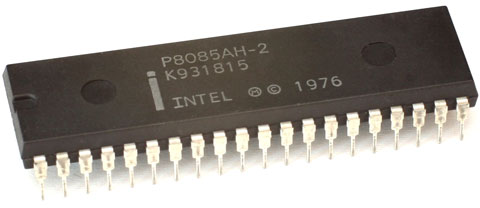 Intel also introduced a slightly improved version of the 8080, the 8085.
The standard operating system of the 8080, Z-80, and 8085 was CP/M, although several computers using these chips also had proprietary operating systems, such as Tandy’s TRS-DOS.
Well Known Z-80 and 8080 Hardware
- Radio Shack TRS-80, earliest models
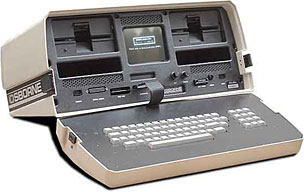 Osborne 1, first portable computer (right)
- Kaypro, early models
- Xerox 820 family
- Sinclair Z80 and ZX80 family
- Microsoft z-80 Softcard for Apple II
- many arcade games
- ColecoVision
- Sega Master System
- Sega Game Gear
- Nintendo Game Boy and Game Boy Color
- Texas Instruments TI-73, TI-81, TI-82, TI-83, TI-83+, TI-84+, TI-85 and TI-86 series and many other scientific calculators
- Ericsson GA628 mobile phone
While 8-bit processors seemed impressive in the late 1970s, by the early 1980s it was becoming evident that their days were numbered as far as personal computers went. Newer CPUs with 16-bit designs were able to address vastly increased amounts of memory, something made necessary by large spreadsheets, large word processing documents, and large databases.
These CPUs have lives on in arcade machines, gaming consoles, and scientific calculators, as well as credit card terminals, sequencers, and synthesizers.
Next: Intel 8086 and 8088
Intel CPU Series: 8080/Z-80, 8086/88, 80186/88, 80286, 80386, 80486, Pentium, Pentium MMX, Pentium Pro, Pentium II, Pentium III, Pentium 4, Pentium D, Pentium M/Core Duo, Core 2 Duo, Core i
Further Reading
- Great Microprocessors of the Past and Present, Intel 8080, John Bayko
- Great Microprocessors of the Past and Present, Zilog Z-80, John Bayko
Keywords: #intel8080 #zilogz80
Short link: http://goo.gl/h74Ehb
searchword: 8080andz80
