
One of the things that sets Macs apart from other computers is their longevity. People don’t just throw them away. Macs tend to soldier on long after their spec sheets say that they’re “obsolete”. This may explain another phenomenon almost unique to the Macintosh subset of the computing world: Mac collectors.
It’s understandable when you think about it. Can you picture someone beaming with pride as they show their friend the Packard Bell 286 or Compaq Deskpro P-133 they just bought, saying “…and look! It still works!” as they turn it on and watch the BIOS screen flicker to hieroglyphic life?
Me neither.
Granted, not all Macs share the same reverence among collectors. Plenty of ill-fated LC II and Performa 630 machines have gone to the recyclers without a whimper. And yet lots of other, equally old Macintoshes still hold proud positions in basement offices and on extra desks all over the computing world.
Signifcant Collector Favorites

Some Macs are sought by collectors for their historic significance. The first 128K machines bring collector’s prices these days – if they’re in collector’s condition, of course. The “wicked fast” IIfx is another machine prized for its place in Mac history. A working Mac TV (right) is a feather in any Mac collector’s cap, and no accumulation of milestone Macintoshes would be complete without a G3 WallStreet or an original Bondi blue iMac. Don’t forget the TiBook, which pointed the way to the laptop form-factor of the future.
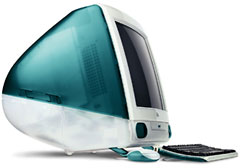 Then there are other machines, often evolutionary dead ends in the history of Macintosh – sometimes even outright Road Apples by the spec sheet – that still spark high levels of interest even today. You see them on eBay, bringing five, ten, or a dozen bids; commanding prices well beyond what some newer, more capable machines will fetch. These are the Culty Macs, and some combination of styling, form factor, rarity, or strange electronic charisma keeps them at the forefront of the Mac collecting world.
The Cult Macs
20th Anniversary Mac
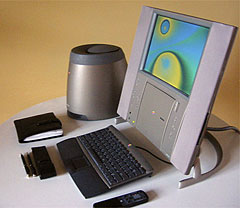 The most obvious, of course, is the Twentieth Anniversary Macintosh (TAM). Designed to be both collectible and a technological tour de force from the start, its rarity guaranteed the first, but its function-follows-form design shot the second goal in the foot from day one. Everyone knows the story about how these supposedly elite machines had to be fire-saled after a year of gathering dust in the showroom, and how their vertical orientation made a choking-slow CD-ROM a necessity. Their expandability is almost nil, and yet now they rate collector’s prices and almost never go unsold, save by the most wildly optimistic sellers.
Incidentally, Low End Mac’s Dan Knight is too modest to point out that his initial review mused that future computers would be influenced by the TAM – thin things with small footprints and built-in LCD screens.
Seen an iMac lately?
 SE/30
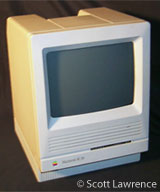
SE/30
The SE/30 is another Mac whose success almost two decades down the road couldn’t be predicted by the spec sheet alone. A 68030 system shoehorned into an SE case with its bitty monochrome monitor? And yet untold numbers chortled away quietly for years as self-contained servers. Their numbers guaranteed a healthy hot-rodding industry. An SE/30 will still bring bids on eBay, while even early Power Macs can be had for ten or twenty bucks plus actual shipping.
Color Classic
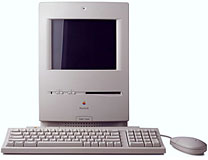 Speaking of Culty all-in-ones, the spec sheet certainly can’t explain the love for the Color Classic. A certified Road Apple with the guts of the nearly reviled LC II placed into a Classic case, they are the subject of some of the most radical surgery performed on Macintoshes. G3 motherboards driving LCD screens shoehorned in and nothing left of the original computer but the box the circuitry came in.
Turn on a Color Classic for the first time, though, and it’s hard not to feel the love. That teeny-tiny color Trinitron screen turns an otherwise normal all-in-one Mac into the cutest thing to ever go “Bong!” on startup. You just want to pat it on its little head; if mine had cheeks, I’d pinch them.
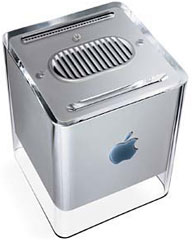 The Cube
The Cube. For a handful of years it felt like you couldn’t watch science fiction on the tube without seeing one. Hardly any expandability, mediocre specs for the price, and yet these days you could buy a couple of ex-server G4 towers for the cost of a Cube, despite the former machines having it all over the latter in the practicality department. Practical the Cube isn’t, but when something is so stylish, such a zen sculpture of a computer, concerns of practicality have a way of going right out the window.
PowerBook 2400c
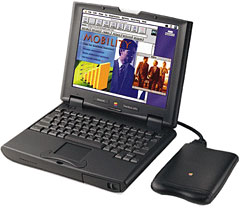 The machine on which I’m typing this is another good example. The PowerBook 2400c is a PowerPC ‘Book that will bring prices equivalent to some of the early G3 laptops. If one loves the Classic Mac OS, then the “Comet” is the lightest, smallest PowerBook on which to run it; it would be a decade before Apple again produced a notebook as compact. It’s a solidly built and stylish little machine that has held its cult following well. Like the Color Classic, the 2400c was a huge hit in miniaturization-crazy Japan – and also like the CC, it’s not uncommon to find Comets souped up far beyond their original specifications.
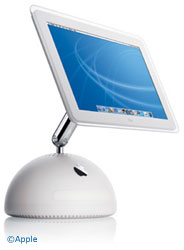 iMac G4
As long as Apple continues to make computers, future generations of Macs will become cult objects with future generations of collectors. I know that I’m beginning to feel a strange longing for the futuristic, offbeat contours of the G4 “iLamp”, and it’s safe to say that the radical new MacBook Air has secured its niche in tomorrow’s collections.
Flower Power iMacs
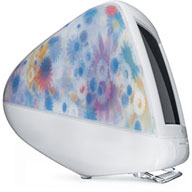 The same “Flower Power” iMacs they couldn’t give away when they were new get snatched up quickly on eBay now, and heaven help me, but I find myself wanting one.
One thing this list shows, however, is that cult status can be hard to predict when a machine is still fresh to the market. Commercial successes sometimes wind up ignored, and sales flops may go on to enjoy loyal followings on the low end. One user’s trash becomes another’s treasure, and who can say what the Cult Mac of five years in the future will be?
This article was first published on 2008.05.13.
Keywords: #10cultmacs
Short link:
Searchword: 10cultmacs
