
One of the problems facing the computer industry today is the fact that so many computers are thrown out each day.
You might think that when you toss your old 286, it’s gone for good. Think again – the world has probably not seen the last of your ancient PC.
An recent investigation found that hazardous electronic waste is being exported to China. The area known as Guiyu in the Guangdong Province has been found to contain over 100,000 workers extracting materials from outdated computers, most of which come from the US.
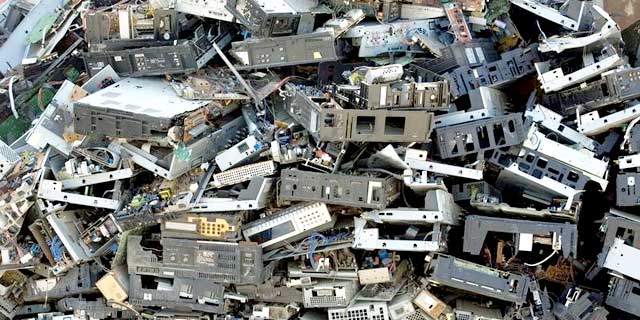
Electronic waste in Guiyu. Image © Greenpeace.
Workers have a choice between either having no money or working tearing old computers apart so they can earn enough money to feed themselves and their families. Things like the open burning of plastic and wires, melting or burning soldered circuit boards, and the breaking and dumping of CRTs are common. Most of the dismantling involves a hammer, chisel, screwdriver, and bare hands – hardly what you’d think of when you think of computer recycling.
What is left of these computers, TVs, and other electronic devices is sometimes dumped in riverbanks, irrigation canals, and fields. Because of this waste, the water in Guiyu is no longer drinkable; water must be imported from other areas.
Apparently, there have been reports that CRTs were sold to China to be rebuilt into new monitors and TV sets. However, this is not what is taking place in Guiyu. The copper yokes are being broken off of the CRTs and sent to copper recovery plants. The rest of the CRTs are often dumped at any location where there is room.
Circuit boards are being “recycled” by removing various components. Hundreds of workers put circuit boards on shallow grills that are heated from underneath. The boards are heated until the chips can be removed. The chips are then sent to acid chemical strippers for gold removal. Sometimes the chips are actually cleaned and made to look new so they can be sent to Guangzhou for use in computer “refabrication.” The remaining circuit board is sent to a burning or acid recovery facility, where any leftover metals are removed. Often the only protection the workers wear at these facilities are rubber gloves. The waste is then dumped into a nearby river.
Computer housings, monitor cases, and keyboards are sent to another village inside of Guiyu to be processed. Plastics are chipped into particles and sorted by children so that they will be a solid color (instead of having spots of different colors when the plastic has hardened) when remelted.
The people doing the disassembling are putting themselves at great health risk. One of the most toxic elements found in obsolete electronic devices is lead, which is known to cause damage to the central nervous system, kidneys, and slow down child brain development. Yet CRTs and soldered circuit boards loaded with lead are simply being spread about in China. And lead isn’t the only toxic material that is found in these devices; cadmium, mercury, chromium, PVC, and barium are just a few of the others.
How much of our obsolete electronics are going to China? 50 to 80 percent of supposedly recycled wastes are actually sent to China (or other Asian countries; it isn’t just China) for processing.
One of the simplest things you can do to slow this down is to keep your equipment longer (see Low End Mac and Low End PC for tips on getting the most out of “obsolete” computers) and keep it in storage when you’ve finished using it. If you do decide to get rid of it, make sure it will be going to a reputable recycling center that does not send equipment abroad to be recycled. While this won’t make a huge difference, it will help.
If you work at a school or office building that has many computers about to be thrown out, see what you can do to prevent that from happening. If necessary, find some charities that might be willing to take the outdated equipment for those who don’t have a computer at all, or, if you are in the position to do so, see if there are any computer manufacturers that might take the old computers in for remanufacturing (Dell will often do this; other companies may as well). You might also consider allowing employees to take home one of the old computers – after everything has been erased, of course.
While this is only another temporary solution, keeping your older computers around longer will reduce the amount of waste being sent to Asia until the US bans the export of electronic waste.
Keywords: #ewaste #electronic waste
searchword: ewaste
